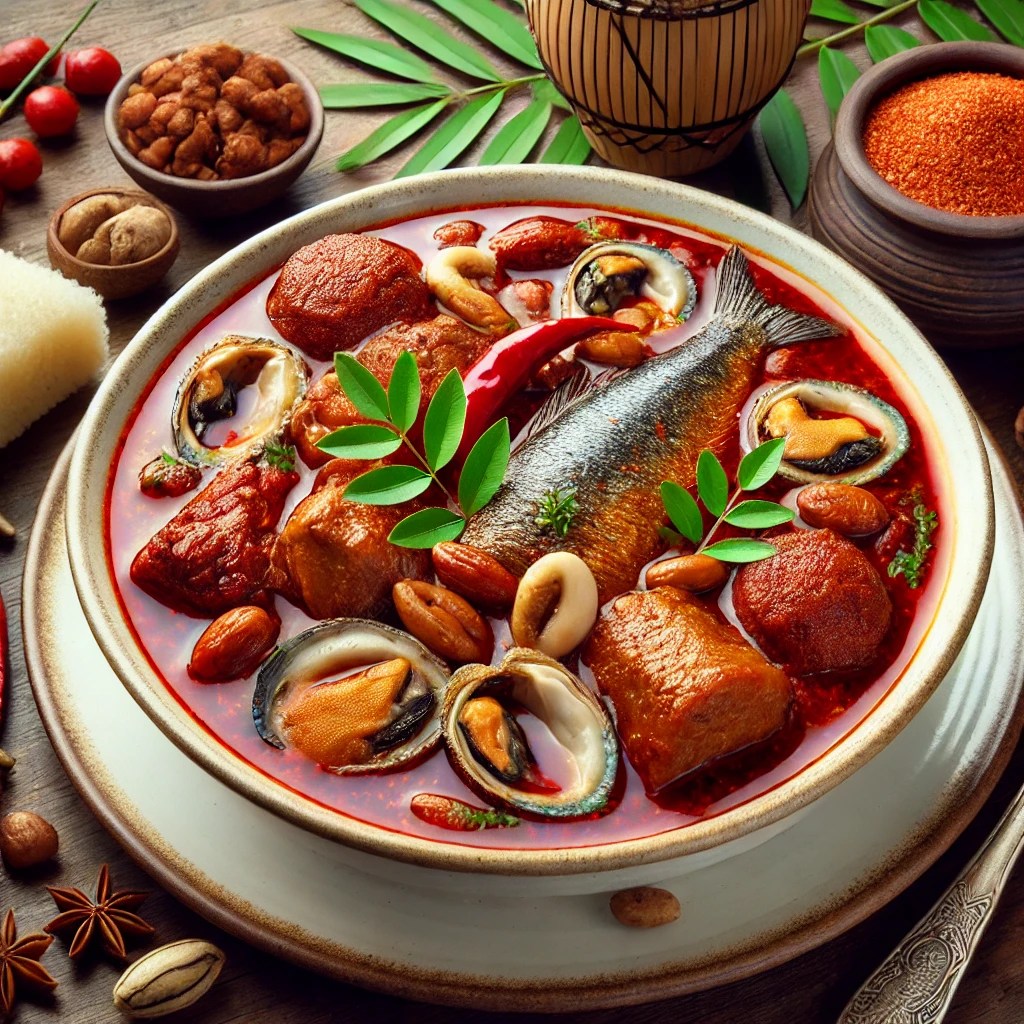
Banga Soup, also known as palm nut soup, is a traditional dish popular among the Urhobo, Itsekiri, and other southern Nigerian ethnic groups. It’s made using palm nuts and is often enjoyed with starch, eba, or pounded yam.
Ingredients:
- Palm fruit concentrate (or palm nuts, if cooking from scratch)
- Assorted meats (beef, goat, or chicken)
- Stockfish (optional)
- Dried or smoked fish (optional)
- Periwinkles (optional)
- Ground crayfish
- Ground dried pepper (or fresh pepper)
- Banga spices: A blend typically including ataiko, rohoje, oburunbebe stick (optional)
- Scent leaves (or dried bitter leaves or basil, depending on availability)
- Onion (optional)
- Seasoning cubes
- Salt to taste
Instructions:
1. Prepare the Palm Nut Concentrate:
- If using fresh palm nuts, boil them until soft. Once done, pound the nuts gently in a mortar to release the oil from the fiber. Add water, strain to extract the juice, and set aside. If using a pre-made Banga concentrate, this step is skipped.
2. Cook the Meat:
- In a large pot, season the assorted meats with salt, onions, seasoning cubes, and ground pepper. Add enough water and cook until the meat is tender.
- Add stockfish and dried fish, and continue cooking until everything is soft and well-flavored.
3. Add the Palm Nut Extract:
- Pour the palm nut concentrate or extract into the pot with the cooked meats and fish.
- Stir and allow the mixture to cook for 10–15 minutes on medium heat, allowing the oil to rise to the surface.
4. Season the Soup:
- Add ground crayfish, more ground pepper (if desired), and Banga spices like ataiko and rohoje. These spices are unique to Banga soup and give it its signature flavor. You can find Banga spice blends in Nigerian markets or use a prepared spice mix.
- Stir and let the soup cook for another 10–15 minutes.
5. Add Scent Leaves:
- Add chopped scent leaves (or substitute with dried bitter leaves or basil if scent leaves are unavailable). This adds a fragrant and earthy flavor to the soup.
- Stir and allow the soup to simmer for another 5–10 minutes.
6. Adjust Seasoning and Serve:
- Taste the soup and adjust the seasoning by adding more salt or seasoning cubes as needed.
- Once the soup is thickened and the oil has risen to the surface, it’s ready to serve.
Serving:
Banga soup is traditionally enjoyed with starch, but it can also be served with eba (garri), fufu, pounded yam, or even white rice, depending on your preference.
This flavorful dish is beloved for its rich, aromatic taste, especially due to the unique blend of spices and palm fruit extract. The scent leaves add an extra layer of aroma, making it a truly satisfying Nigerian meal.
Here is an image of Nigerian Banga Soup, showcasing the rich, red soup served with assorted meats, fish, and periwinkles, and garnished with scent leaves. The dish is traditionally enjoyed with starch like pounded yam or garri.
“This post contains affiliate links. If you click on a link and make a purchase, I may receive a commission.”

